2025 Everytown Community Safety Fund Recap

1.15.2026
At the end of 2025, the number of shootings and gun deaths had fallen for the third year in a row in many cities across the country, sustaining a historic decline in gun violence. Early data indicate that 2025 marked the lowest number of shooting deaths in the U.S. since 2015. That progress reflects sustained local leadership and state, city, and philanthropic investment in community safety as part of a comprehensive approach to violence reduction.
But as we head into 2026, that progress remains fragile.
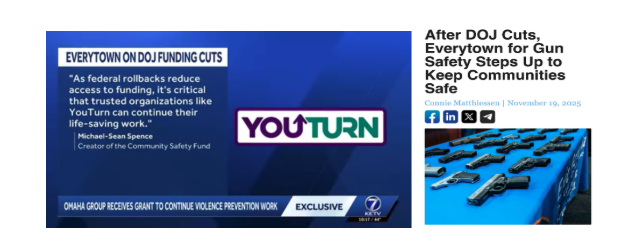
In April 2025, the Department of Justice cut $800 million in gun violence prevention grants nationwide, $158 million of which was going to community-based violence intervention (CVI) organizations. Everytown Community Safety Fund’s grantees alone had been awarded $22.7 million of that CVI funding—and across the country, the impact of the funding cuts was immediate.
Among other things, the federal funding had allowed grantees to:
- Hire more staff to mediate conflicts or mentor community members,
- Maintain physical office space in communities where CVI work was happening, and
- Conduct studies on the public health efficacy of their work.
The April federal funding cuts created an urgent crisis for the CVI field and a direct threat to our grantees. Dozens of organizations were placed at risk, with some forced to reduce up to 100% of their staff.
In response, the Everytown Community Safety Fund moved quickly to stabilize critical CVI infrastructure and protect the progress communities have fought to achieve. We refused to let politics come before people—or dismantle what works.
Our Response to Federal CVI Funding Cuts
1. We prioritized stability when it was at risk.
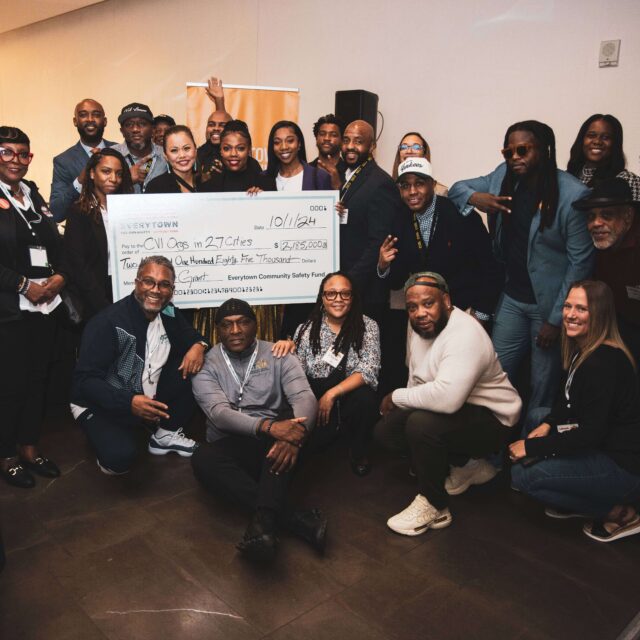
As cities that invested in trusted, proven strategies saw gun violence continue to decline, shortsighted federal cuts threatened to undo that progress. In response, we delivered $2.67 million in support to 44 CVI organizations, bringing our total direct investment to $15.7 million across 142 CVI organizations in 72 cities.
These funds helped organizations to:
- Retain staff,
- Maintain a presence in neighborhoods, and
- Continue supporting people at the highest risk of being harmed or killed.
We also renewed funding and extended trainings for organizations most impacted by the federal rollback to help them stay rooted and responsive.
2. We invested in people, not just programs.
In 2025, we leveraged our partnerships to connect and support the people leading this work.
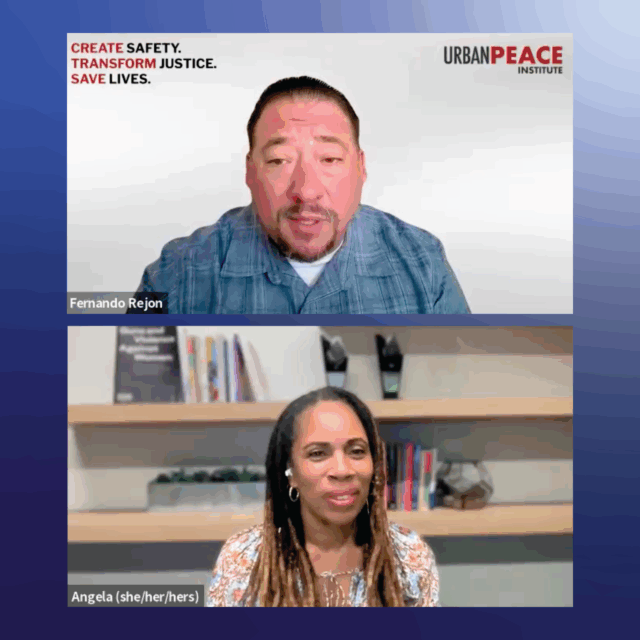
Within 24 hours of the federal rollback, we convened all 45 of our current grantees alongside The Joyce Foundation, the National Basketball Social Justice Coalition, and LISC. We also conducted site visits to two grantees—Circle of Brotherhood (Miami) and The BUILD Program (Los Angeles)—to learn more about the impact they are making on their communities with our support. In Los Angeles, we spent time with the late and legendary Dr. Aquil Basheer, whose example and enduring legacy will continue to inspire leaders for years to come.
We also supported in-person gatherings and trainings for CVI leaders in a year where connection was more needed than ever.
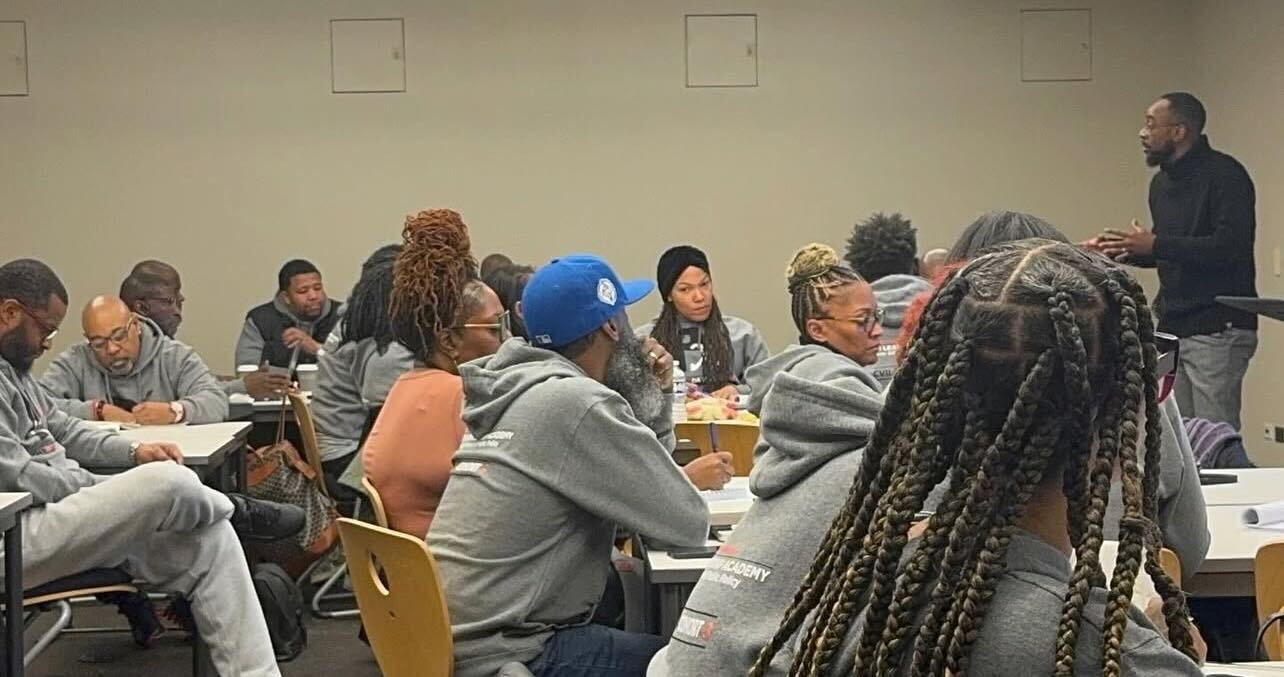
- We trained more than 60 practitioners through the University of Chicago’s CVI Leadership Academy (CVILA).
- We brought grantee leaders to the national stage by delivering the keynote to over 1,000 attendees at Giffords’ annual CVI conference.
- We supported the University of Maryland’s Violence Reduction Center’s convening of 100+ academic, community, and government leaders focused on social media and gun violence.
3. We strengthened organizations for the long term.
Immediate financial assistance and institutional support have been critical for CVI organizations in the aftermath of federal grant rollbacks. However, these organizations also need capacity building that goes beyond a specific political climate or funding landscape.
That’s why we conducted our first-ever program-wide needs assessment of all current grantees in May 2025. We asked CVI leaders what support they needed to build the internal infrastructure needed to weather moments like this year—and to last. And then, we took action by:
- Training grantees from Detroit, Harlem (NY), and New Orleans in cognitive-behavioral therapy (CBT) approaches used in violence intervention with the Roca Impact Institute.
- Supporting organizational capacity-building for Bronx-based CVI organizations, including financial and leadership development in partnership with the NYC Department of Youth & Community Development and LISC.
- Providing tailored executive leadership coaching for all grantee organizations with support from CSF advisory board members Erica Atwood and Anne Marks.
4. We helped change the narrative.
From weekly update calls to wellness check-ins, we watched CVI practitioners across the country come together to weather the moment. The field strengthened its connective tissue and ensured that leaders were informed, supported, and not navigating uncertainty alone.
We did our part to amplify the real impact of the rollback on our grantees by centering their experiences and elevating their voices, making visible what was at stake for communities and the organizations serving them.
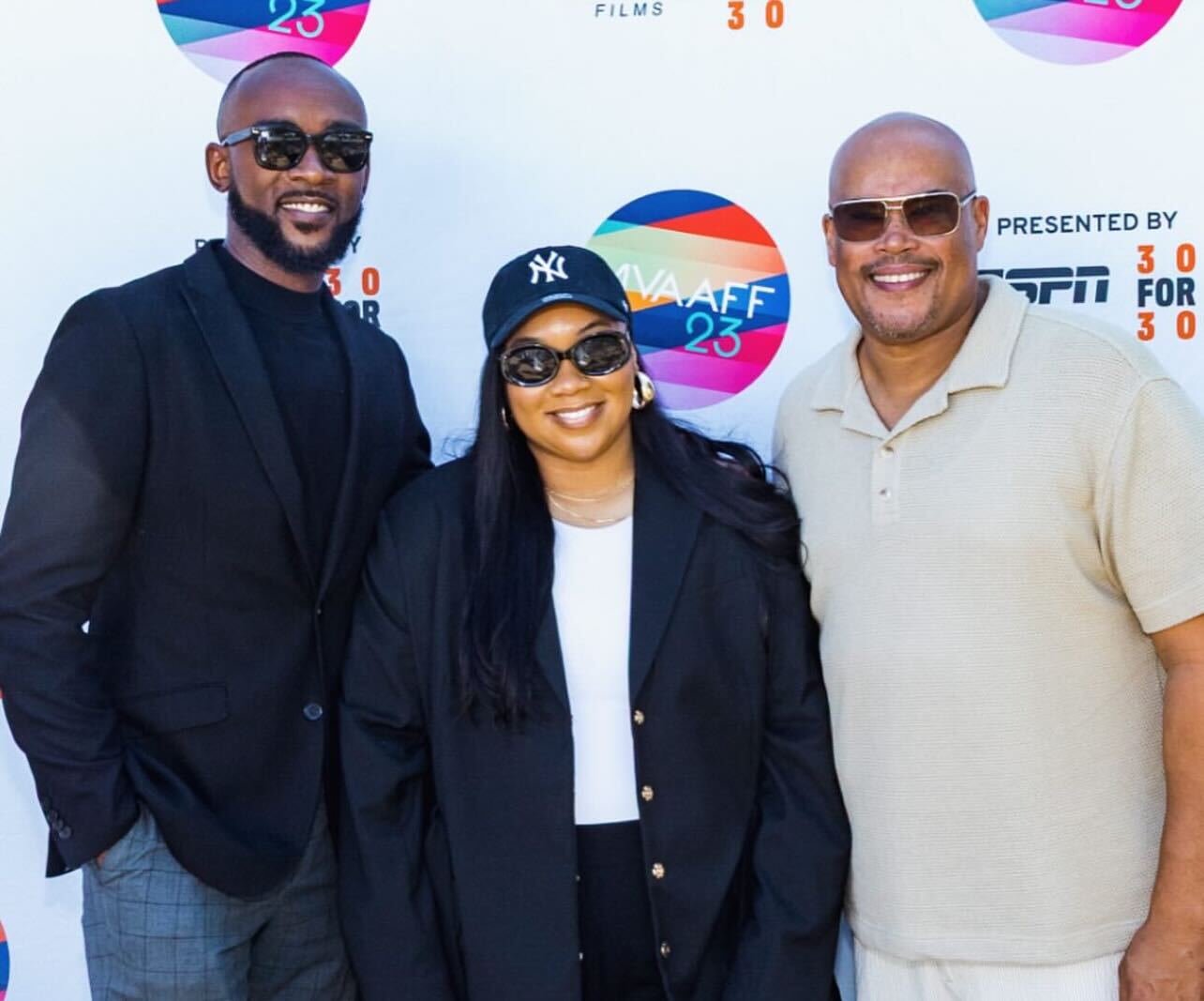
We also premiered our short documentary, Pieces of the Puzzle, directed by two-time Emmy Award–winning filmmaker Santana Coleman and featuring advisory board member Marcus McAllister as he traveled the country supporting and amplifying our grantees’ work. The film debuted at the Martha’s Vineyard African American Film Festival and went on to screen with the NAACP in Honolulu, Cities United in Louisville, and the Center for American Progress in Washington, D.C., sparking conversations too often missing from public debates about safety.
Looking Ahead
In 2025, we celebrated the role that community violence intervention organizations have played in this nation’s historic decline in gun violence. But in a time where we should have been focused on building on this progress, we instead had to focus on holding the line: protecting hard-won progress and standing with the people doing life-saving work as the landscape grew more volatile and uncertain.
The conditions that drive reductions in violence depend on trust, consistency, and long-term investment in community leadership. When those conditions are weakened—by sudden funding cuts, political shifts, or short-term thinking—the consequences are felt first and most deeply by the communities most at risk.
As federal support recedes and public discourse grows more polarized, the need for steady, values-driven leadership becomes even more urgent. We will continue to show up alongside practitioners, helping organizations stabilize, adapt, and build the resilience needed to withstand disruption—while keeping communities safe.
This administration may have turned its back on communities and leaders who need support—but we will not. We remain focused on what works, committed to the people closest to the problem, and clear-eyed about what it takes to sustain progress in the years ahead. Through partnership and shared learning, CSF will continue investing in a future where communities are safer, stronger, and more resilient together.