After the Trump Administration’s CVI Federal Funding Cuts, Where Are We Now?
6.5.2026
Key Takeaways: Ongoing Impact of Federal CVI Funding Cuts
- The April 2025 federal funding cuts by the Trump DOJ eliminated grants initially valued at roughly $169 million for community safety and violence reduction programs
- Following revisions by the administration to the CVIPI program, CVI organizations are no longer eligible to apply directly for the funds
- More than one year after the initial federal funding cuts, many CVI organizations have been forced to lay off staff and/or increase their workloads to meet the needs of community members
On a Tuesday evening in April 2025, Cheryl Riviere, program director at Living Classrooms in Baltimore, MD, was preparing to meet with her CEO. Brother Lyle Muhammad, the executive director of Circle of Brotherhood in Miami, FL, was wrapping up his workday. And in Oakland, CA, policy and advocacy director Gabriel Garcia was in the office with other colleagues at Youth Alive.
Living Classrooms, Circle of Brotherhood, and Youth Alive have been grantees of the Everytown Community Safety Fund since 2021, 2022, and 2020, respectively. They were also three of the more than 365 organizations receiving federal grant funding for violence reduction work from the Department of Justice’s Office of Justice Programs. Funds for CVI work had been allocated through the 2022 Bipartisan Safer Communities Act, professionalizing a field that had struggled to obtain financial and structural support at the city, state, and federal levels for over 30 years, and allowing it to scale.
The grantees who spoke with us for this story all shared that, for them, 2025 felt like the culmination of years of educating the public and policymakers about the necessity of sustained financial support for CVI work. And it was working. In recent years, as CVI initiatives have expanded, the country has also experienced historic reductions in crime rates. In some zipcodes where they were concentrating their efforts, our grantees told us, gun homicide rates had dropped by 20 to as much as 80 percent.
‘The date lives in infamy’
And then, as the day wrapped after 5 p.m., an email arrived: “This award is being terminated.”
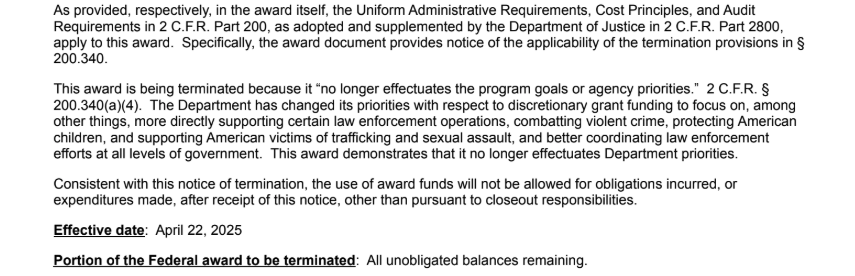
Grantees we spoke with shared that they weren’t wholly surprised by the funding cuts. CVI funding was reduced at the same time the administration was slashing funding for science, the arts, and DEI initiatives. Grantees had suspected that they likely couldn’t depend on new funding from the government moving forward.
What they hadn’t counted on was that the funding made possible through the historic passage of the Bipartisan Safer Communities Act in 2022 — support they relied on to pay staff, run their organizations, and support their communities — would disappear, quite literally, overnight.
“There’s no replacing $2 million dollars overnight. Even with a year’s timeline, replacing a $2 million grant from the federal government just is not feasible.”
— Gabriel Garcia, Youth Alive
According to the Council on Criminal Justice, the April 2025 cuts “eliminated grants initially valued at roughly $169 million in funding” for community safety and violence reduction programs. The Council noted that, while new administrations often adjust funding priorities, “[t]here is no precedent for rescinding funds without cause from a swath of DOJ grantees that have already successfully applied for and been awarded federal dollars.”
“The date lives in infamy: April 22nd,” said Gabriel Garcia. “From there, it was trying to get clarity on what this meant for us.” For Youth Alive, the loss of funding limited a planned integration of violence interrupters into its hospital-based violence intervention program (HVIP). The organization — the first to pioneer the HVIP model more than 30 years ago — had anticipated that expanding its violence interruption work would help stem retaliatory violence in the community.
Due to ongoing litigation, the varying status of grants at the time of cuts (some organizations had spent down most of their dollars and awaited reimbursement, while others lost nearly the entire grant award), and piecemeal restorations from the government following appeals, it’s difficult to put an exact number on how much money was lost. Community Safety Fund grantees alone lost access to nearly $23 million in federal grant funding. What we can name with certainty is that the abrupt funding cuts devastated the capacity of hundreds of CVI organizations across the country.
“And it was hurtful, not [just] for the organization, but it was hurtful for our community to be disappointed once again,” Cheryl Riviere said. Living Classrooms had planned to expand its Operation Respond mobile crisis unit to serve at least 150 community members. After the elimination of federal funding, the organization had to lay off two resource navigators and two case managers — nearly fifty percent of its planned staffing. At present, Operation Respond has reached nearly 90 community members. “We want to provide for them as much as possible,” Riviere said, “but we’re seeing more and more that we have to look for other providers, but no other provider is doing the uniqueness of stabilization services [that] we’re doing.”
Riviere shared that one way community members come to Living Classrooms is through word of mouth. Many have been referred by individuals who were served prior to the funding cuts. When the new arrivals show up to ask for help, the same resources are no longer in place. “It’s impacting our trust in a sense,” Riviere continued. “We had one person who said, ‘Well, I heard you helped this person with this about a year and a half ago. So why can’t I get help with this?’ And rightfully so … they don’t understand funding, they don’t understand cuts, and it’s not for them to understand.”
The heart of community violence intervention work is the trust and connection that is built over time between community members and credible messengers — community members themselves with the tools, knowledge, and lived experience to intervene in and prevent violence.
“It is a relationship-based, trust-driven intervention that requires consistency to be effective,” said Florence Fleischer Djoleto, director of operations at Ubuntu Village NOLA. “When funding is interrupted, it disrupts outreach in the very neighborhoods where violence is most concentrated. Credible messengers who have built trust with high-risk individuals are pulled away, weakening the continuity critical to preventing retaliation and de-escalating conflict.”
‘Are we going to be able to make payroll?’
In the April 2025 email, the Department of Justice stated that it was terminating CVI grantee awards to concentrate efforts more fully on, among other things, “combatting violent crime” and “protecting American children.” Yet that’s exactly the work that violence intervention programs like Living Classrooms were doing across the country. One study found that every 10 additional organizations focusing on crime and community life in a city leads to a nine percent reduction in the murder rate, a six percent reduction in the violent crime rate, and a four percent reduction in the property crime rate.
Anecdotal data from our grantees indicates that, in some communities, the impact was much more concentrated. Brother Lyle Muhammad shared that, in the zip codes where the Circle of Brotherhood was concentrating its efforts, gun homicide rates had dropped by more than 60 percent. He reported knowing exactly why that progress had been made: The dedicated relationship building and community connections formed by his staff. His first phone call after seeing the email termination notice was to his CPA: “Are we going to be able to make payroll?” Across the country, other organizations were asking the same.
Many programs are unsure how long they can sustain with dwindling resources and limited alternatives. Some have, unfortunately, already had to close their doors, unable to continue paying staff and operational costs. But collectively, the CVI ecosystem is innovating to continue its contributions to a historic decline in gun violence in a great display of resilience.
Some organizations, like Youth Alive, were able to shift staff members originally working on grant-funded programs to other roles in the organization so they could keep their jobs. Others, like Circle of Brotherhood, had to furlough all of their staff for months at a time, keeping operations going purely through unpaid time. And many, like Living Classrooms and Portland Opportunities Industrialization Center (POIC), landed somewhere in the middle: Doors stayed open thanks to community assistance and devastating, but necessary to continue operations, staff layoffs. The staff who remain are working longer hours with larger caseloads, remaining dedicated to serving community members at the greatest risk of being victimized by or perpetrating violence.
“There were cases of individuals who had health issues trying to lead under these situations. Heart conditions and situations, blood pressure, and so on, there was a tremendous health effect that likely hasn’t been told,” said Brother Lyle Muhammad. “I think people who are surviving like myself at this time in this work are probably not given credit for how incredibly creative we are as CEOs and what we’ve been able to do to sustain our organizations.”
Spotlight: Organization Impact
“We lost a $2 million CVIPI grant, and federal funding cuts have continued to trickle down to the state and city levels. As a result, we’ve had to make difficult staffing reductions while simultaneously expanding our programming due to the loss of culturally specific services — particularly within our HVIP. We are now responding to all trauma victims, which has significantly increased our workload despite having fewer staff to meet the demand.”
— Roy Moore, Co-Director of Community Care Team at POIC
‘A poison pill’
But the organizations that are working so hard to maintain the trust of their community members are facing another challenge as the Trump administration’s actions go beyond terminating awards. Although the 2022 passage of the Bipartisan Safer Communities Act allocated $250 million over five years to establish the Community Violence Intervention and Prevention Initiative (CVIPI) under the Department of Justice, this administration has since excluded the very organizations the CVIPI grants were designed to support from directly accessing those funds. Now, organizations must go through law enforcement or other city or state agencies to apply for funding.
“We operate in several neighborhoods with a high concentration of migrants and immigrants,” said Ramik Jamar Williams, the co-executive director of the Kings Against Violence Initiative in Brooklyn, NY. “The shift in the administration’s priorities has left many of the people we serve feeling vulnerable and unsupported. Additionally, the ICE raids have caused tensions and unease among many.”
“The requirement that any organizations that are receiving this funding then have to share data with the Department of Homeland Security is a very clear kind of poison pill that then makes this impossible for any organizations that are serious about serving the immigrant communities who are heavily impacted by violence,” added Gabriel Garcia from Youth Alive. “When we have to decide whether or not to pursue funding or sell out our communities, the answer for us is clear, but understandably, there are organizations that are faced with a much tougher choice — where, without this funding, there is no recuperation.”
Spotlight: Ecosystem Impact
“Cuts to federal funding created a domino effect across the CVI landscape. As available resources became more limited, competition for remaining funding opportunities grew increasingly intense. Local and state governments were then left to address funding gaps that were ultimately unsustainable. As a result, even established CVI organizations lost critical support and were forced to lay off frontline practitioners, creating community safety concerns.”
—Carlos De Santiago, capacity building program manager with the Urban Peace Institute
Responding to ongoing need: Where do we go from here?
“I think a bigger cut, no pun intended, than the federal budget cuts was the cut in the national collaborative momentum that was being garnered in this work,” Brother Lyle Muhammad said. “It was being garnered from the streets all the way up into the halls of policy. And so a lot of these broken strings and strands had to be repaired, but at the same time, there was resolve.”
The CVI ecosystem has come together to continue educating the public about what community violence intervention work entails, and why it is so critical to sustain, even as the federal funding priorities shift. Although researchers are still working to determine the specific factors that contributed to the decline in gun homicide rates since 2021, CVI organizations are also pointing to the three-year trend as an indication that reducing crime and protecting communities goes beyond the influence of one administration. Many organizations were quick to point out to us that they do violence intervention work to protect their communities, not to get “credit” from media or national sources. However, ensuring that the public and policymakers are aware of the role that CVI programs have played in reducing gun violence might also open doors to additional funding from philanthropic and government sources.
The Everytown Community Safety Fund (CSF) was one of the organizations that played a key role in sustaining the national momentum of the CVI movement. In the wake of the funding cuts, the CSF organized CVI convenings, capacity-building trainings, and leadership coaching to fill the gap in infrastructure left by the federal rollbacks. We also granted $2.67 million to 44 organizations across the country in unrestricted funds, allowing each program to direct the money to the aspects of the organization that were in greatest need.
“The hospital-based violence intervention program is one that Youth Alive invented, so there is an additional weight to the fact that all of these [federal] cuts are threatening the very founding program within the field itself,” said Gabriel Garcia. “And I don’t know that that is always felt and appreciated by our local policy and decision-makers. So having a national organization like Everytown recognize that and support us is always helpful and appreciated.”
Philanthropists and policymakers across the country have also worked to fill the funding gap. Some states protected, or even increased, community violence intervention funding in their budgets. “Had it not been for those foundations and institutions that believed in this work in general, and our work specifically, we wouldn’t have been able to sustain ourselves through that,” said Brother Lyle Muhammad. However, the level of need continues to outpace the resources any one funder or state has. For example, California allocated $105 million through its California Violence Intervention and Prevention (CALVIP) program — but the submitted proposals to access that funding totaled over $1 billion, said Gabriel Garcia.
Living Classrooms used Everytown’s funding to scale up its Operation Respond work as much as possible. However, Cheryl Riviere shared that the organization will be facing layoffs or closure if it can’t fill the $400,000 hole in the budget left by the federal cuts. On the day we spoke, Cheryl was writing and submitting two different grant proposals to her state government. “We’re trying to get that gap down as much as possible, but if we don’t come up with it by the end of the year, I don’t know if we’d be able to sustain,” she said.
The funding from Everytown, alongside significant community support, allowed Circle of Brotherhood to bring some of its peacemakers back from furlough to full-time staff. As of this writing, 15 peacemakers have been brought back, while 35 others remain on furlough. The staff remain committed to building connections with those most at risk of violence in their community, but continue to face constraints in quantifying their impact. The federal funding they were receiving wasn’t written to meet benchmarks, Brother Lyle Muhammad told us, but was instead meant to establish outcomes of the measurable impact that can stem from fully funded CVI programs. With the funding revoked, Circle of Brotherhood won’t have the consistent conditions needed to most accurately measure that data.
“Without investment into understanding how people are incurring injuries and what’s fueling community violence—and then developing and testing solutions—Americans are less safe,” David Hemenway, director of the Harvard Injury Control Research Center, shared in Q&A with the Harvard T.H. Chan School of Public Health. “The kicker is, we may not know how much less safe, because the funding cuts haven’t spared data systems. The CDC’s non-fatal firearm injury data system is being eliminated, for example, meaning we’ve lost our best source of data on the proportion of non-fatal gunshot wounds that are due to assaults, self-harm, or accidents. And since most CDC injury prevention scientists have been terminated, it’s unclear whether remaining systems, such as the National Violent Death Reporting System, will have the manpower to be maintained.”
While much about the future of CVI is uncertain, Youth Alive, Living Classrooms, Circle of Brotherhood, and other grantees emphasized that they’ll continue working to reach those in their communities who are most at risk of violence as long as they can. They aren’t sure if the trends in declining gun violence rates will hold in the absence of sustained federal support — but they are confident that community violence intervention work is making the country safer, one neighborhood at a time.
“Despite what the data shows, when I even say 61 to 83 percent drop in homicides in our zip codes, those are human beings,” Brother Lyle Muhammad said. “Those are bodies. Those are lives. And so our work continues to press on and continues to move forward.”
CVI Terminology Glossary
-
Community violence intervention (CVI)
Community violence intervention (CVI) is a promising, evidence-based public safety strategy rooted in prevention, trust, and healing. It seeks to reduce gun violence by identifying and supporting the small group of individuals most at risk of causing harm/ experiencing harm. CVI organizations and/or programs build personal relationships with and directly serve the people in their neighborhoods or communities. These organizations work to address the root causes of violence, including historic disinvestment in neighborhoods, social determinants of health like food and/or housing insecurity, and discriminatory policing. Learn more about CVI.
-
Hospital-based violence intervention program (HVIP)
Hospital-based violence intervention programs (HVIPs) across the country interrupt violence in a hospital setting, serving direct survivors of violence along with their families. These programs are either hospital-based — led by a CVI organization and run out of a hospital — or hospital-linked — led by a hospital, which connects patients to CVI services. No matter the model, program services start at a patient’s bedside. In the days, weeks, and months following a violent injury, HVIP client advocates continue to provide support to the survivor of violence and their loved ones. HVIPs use crisis intervention, including counseling and service referrals, to prevent reinjury or retaliation. According to a joint report released by Everytown for Gun Safety Support Fund and The Health Alliance for Violence Intervention (HAVI), “Promising research shows that HVIPs are associated with reduced risks of future violence and crime.” The report cited studies in multiple cities that “found that HVIP participants’ reinjury rates were at least 50 percent lower than nonparticipants’—over periods ranging from two months to six years after they had completed the program.” Learn more about the benefits of HVIPs.
-
Credible messengers
Credible messengers are frontline CVI workers with the tools, knowledge, and lived experience to intervene in and prevent violence. Their work prioritizes trust, relationship building, and intimate knowledge of community dynamics to reach those who are most likely to be victimized by or perpetrators of violence.
-
Community Violence Intervention and Prevention Initiative (CVIPI)
The Community Violence Intervention and Prevention Initiative (CVIPI) is a historic program launched by the Department of Justice following the 2022 passage of the Bipartisan Safer Communities Act. CVIPI allocated $250 million in funding to CVI programs.
-
Everytown Community Safety Fund (CSF)
The Everytown Community Safety Fund supports 501(c)3 organizations implementing community-based violence intervention (CVI) programs operating in cities nationwide as a core component of a comprehensive approach to reducing gun violence in America. We deliver resources to help community-based violence intervention organizations sustain and scale their essential, life-saving work via direct investment through grants, capacity-building training, peer convenings, and advocacy campaigns. Learn more about the Everytown Community Safety Fund.
Community Safety Fund Grantees Impacted by Federal CVI Funding Cuts
| Organization | Year Awarded | Initial Award Amount | Amount Unspent at Time of April 2025 Cancellation |
|---|---|---|---|
| Center for Hope | 2024 | $1,999,913 | Unknown by CSF |
| Center for Hope | 2023 | $2,000,000 | $1,200,000 |
| Children and Youth Justice Center | 2023 | $4,000,000 | $2,100,000 |
| Children and Youth Justice Center | 2022 | $2,000,000 | $2,000,000 |
| Circle of Brotherhood | 2022 | $2,000,000 | $608,399 |
| Cleveland Peacemakers | 2023 | $2,000,000 | $1,700,000 |
| FORCE Detroit | 2024 | $1,999,998 | Unknown by CSF |
| Getting Out Staying Out | 2022 | $2,000,000 | $250,000 |
| Grady Health System | 2023 | $2,000,000 | Unknown by CSF |
| LIFE Camp, Inc. | 2024 | Unknown by CSF | Unknown by CSF |
| Living Classrooms | 2022 | $1,950,000 | Unknown by CSF |
| Metropolitan Family Services | 2022 | $2,000,000 | $1,825,000 |
| Metropolitan Family Services | 2024/25 | $2,200,000 | $1,865,000 |
| Next Step | 2023 | $499,682 | $65,000 |
| Peace For DC | 2023 | $2,000,000 | $1,438,513 |
| POIC (Portland Opportunities Industrialization Center) | 2024 | $1,998,264 | $1,998,264 |
| ROCA Baltimore | 2022 | $2,000,000 | $900,000 |
| ROCA Boston | 2023 | $2,000,000 | $1,300,000 |
| ROCA Women | 2024 | $2,000,000 | $1,860,000 |
| Selma | 2024 | $1,999,574 | $1,999,574 |
| The BRIC | 2024 | $1,999,913 | $1,349,913 |
| Youth Alive! | 2024 | $2,000,000 | $1,940,000 |